Blog

  • 🌿 Rooted in Reality

    🌿 Rooted in Reality

    There’s a lot of talk about being grounded. People mention staying connected, planting their feet, breathing deeply, keeping a routine. Those things help. They remind the body what steadiness feels like. But grounding has never felt to me like a checklist. It’s not something to perform or maintain—it’s something that happens when the noise softens, when presence starts to hum quietly beneath everything.

    During the Roots share circle last Sunday, that became clear again. The room filled with stories about what keeps people anchored—walks, music, prayer, time away from phones. And just as many stories of what pulls them off center—scrolling, substances, food, the need to stay busy. Every story carried its own kind of tenderness, the human way of reaching for balance. But under all of it, something deeper kept whispering through: grounding isn’t found in the actions themselves. It’s in what those actions help reveal.

    Those little rituals—breathing, journaling, sitting in silence—are like the wind through branches. They remind the roots to reach down, not because the ritual is the root, but because it points back toward what’s already there: the stillness underneath doing. Presence itself.

    Presence doesn’t arrive through effort. It settles in when resistance loosens. A tree doesn’t force its roots deeper; it just grows toward what nourishes it. Life seems to move the same way.

    It’s easy to live mostly in the branches—reaching for understanding, for progress, for spiritual height. The mind likes the upward motion; it feels like growth. But when roots stop keeping pace with the branches, the whole thing starts to sway. A life built only on light, without depth, can look impressive for a while, but it’s brittle.

    That’s where the illusion begins—height mistaken for depth, expansion mistaken for embodiment, transcendence mistaken for truth. I’ve seen spirituality turn into a kind of escape hatch, a vertical flight from the weight of being human. Freedom without roots can mimic peace, but it carries a certain vacancy. It floats above feeling.

    Ungroundedness sometimes looks chaotic, but it can just as easily look serene. There’s a version of calm that’s actually disconnection—“I’m beyond it all, none of this matters.” That kind of detachment once looked noble to me, until I realized how much of it was fear of contact, fear of being touched by life. There’s a kind of enlightenment that’s really just dissociation wearing a white robe.

    Real grounding has always shown up closer to the body. It asks for a willingness to stay in contact—with the ache in the chest, the trembling, the laughter, the hunger, the quiet pulse behind the ribs. It doesn’t demand purity; it asks for presence.

    The temptation to float away shows up everywhere. It wears many faces—constant ceremony, endless seeking, identity built around being a “healer” or “lightworker,” stories about saving the planet while daily life quietly unravels. I’ve watched people disappear into those clouds, and I’ve disappeared there too. It feels safer to orbit an idea of awakening than to face the rawness of ordinary truth. Easier to imagine being cosmic than to take responsibility for the simple, human parts of life that still need tending.

    Ungrounded life finds comfort in false ground—things that soothe for a moment but don’t sustain: screens, substances, overwork, drama, spiritual grandeur. They numb the discomfort that might have been the doorway back to honesty. The stories sound beautiful, but they hover above reality instead of entering it.

    Groundedness, on the other hand, keeps returning to what’s real even when it’s uncomfortable. It doesn’t mean having a stable job or a wild life, or any particular form. I’ve seen stability hide deep denial, and chaos hold incredible clarity. Grounding seems less about what the life looks like, more about how much of it is actually being felt.

    When the body is allowed to be part of the path again, everything shifts. The sacred stops being somewhere “up there” and starts breathing through every simple thing—the taste of food, the warmth of sunlight, the heaviness of tears. Ayahuasca has taught that better than any concept. She shows vast visions, yes, but her real teaching lands only after the visions fade—when the feet meet the ground again. The ceremony has never been an escape from being human; it’s an invitation back into it.

    The image that returns often is the Tree of Life reflected in water—branches above, roots below, mirrored perfectly. The deeper the roots go into darkness, the higher the branches can rise toward light. There’s no need to choose between them. Real wholeness lives in their meeting.

    That balance feels a lot like what the prophecy of the Eagle and the Condor speaks to. The Eagle with its clear mind and sharp sight, the Condor with its soft heart and closeness to the earth. Two ways of knowing that become one when they finally stop competing. The sky doesn’t diminish the soil, and the soil doesn’t trap the sky. Both are needed for flight to mean anything.

    Maybe grounding is just that balance expressed through a human life—the meeting of seeing and feeling, thought and body, spirit and matter. It’s less a discipline and more a relationship. Something alive that keeps deepening the longer it’s tended.

    This kind of rootedness doesn’t arrive by pretending to have outgrown pain or fear. It grows by letting pain and fear have a place at the table. It grows by noticing where the pretending still lives, where fantasy still hides what’s real. That noticing can be uncomfortable, but it’s also where the integrity of presence begins.

    Nothing about this feels like instruction. It feels like gravity, quiet and patient. Each time awareness drifts, life has a way of inviting it back—through breath, through sensation, through the ordinary moments that don’t look spiritual at all. The pull downward isn’t punishment; it’s belonging.

    The work isn’t in climbing higher, it’s in allowing depth. The branches will reach on their own once the roots are strong enough to hold them. Every time attention returns to the present—the feel of the earth, the sound of breath, the truth of what’s actually happening—another root finds its way into the soil.

    Grounding, in the end, feels less like something to seek and more like something that reveals itself when the seeking quiets. The moment thought stops running ahead or reaching beyond, reality comes rushing back. There’s no instruction for that, no formula. Just the simple recognition: here it is again. Here I am again.

    The ground never went anywhere.

    A’ho 💛
    Two Birds Church 🕊️🦅

  • Finding Your Way Back to Safety

    Finding Your Way Back to Safety

    The world feels heavy right now. There are sharp voices everywhere, constant divisions, arguments about what comes next. Underneath all of it, there’s something simple: we all want to feel safe.

    That’s what we worked with on Sunday. Not safety as something we can control or manufacture, but as something we can return to in our own bodies, even when everything outside feels chaotic.

    Why This Matters

    Here’s what happens when we don’t feel safe: our bodies tighten up. Shoulders creep toward our ears. Breath gets shallow. Stomach clenches. We’re constantly braced for the next bad thing. That’s a normal human response to threat, but we can’t live like that all the time. It’s exhausting. It affects how we sleep, how we relate to other people, how we think.

    This meditation wasn’t about pretending the world is fine when it’s not. It was about learning to work with our own nervous systems. When we’re stuck in that fight-or-flight response all day, we lose access to the parts of ourselves that can think clearly, respond thoughtfully, and actually deal with problems instead of just reacting to them.

    So we practiced finding moments of calm in our bodies. Not to bypass legitimate concerns about the state of things, but to give ourselves a foundation to stand on when everything else feels unsteady.

    Starting Where You Are

    We began simple. Just sitting and noticing the surface beneath us. Feeling the chair or floor holding us up. That sounds basic, but when was the last time you actually let yourself be supported instead of holding yourself rigid all the time?

    Then we worked with the breath. Four counts in through the nose, six counts out through the mouth. That longer exhale is important – it signals to your nervous system that it’s okay to relax. Your body responds to that rhythm.

    Before we tried to feel better or fix anything, we acknowledged what’s actually present. Fear lives somewhere in your body. For some people it’s chest tightness. For others it’s a knot in the stomach, tension in the jaw, weight on the shoulders. We took time to just notice where it shows up, without trying to make it go away. Just “okay, this is fear, and I see it.”

    You can’t work with something if you’re pretending it’s not there.

    After that, we started shifting the relationship to fear through the breath. Inhaling and imagining drawing in safety – not as an abstract concept but as something you can actually feel. Maybe warmth in your chest. Maybe steadiness in your feet. Maybe just the simple rhythm of breath moving in and out. Then exhaling and releasing a bit of tension. Not forcing anything, just allowing a little softening with each breath.

    Why We Worked With the Body

    This is where the meditation gets interesting. We spent time moving through seven different areas of the body, and each one connects to different aspects of being human.

    We started at the bottom – feet, legs, base of the spine. This is your foundation, your connection to what’s holding you up. We worked with the reality that it’s safe to exist, to be here, to belong. That might sound obvious, but a lot of us walk around with a low-level anxiety that we’re somehow not supposed to be taking up space in the world. Starting here matters because you can’t build anything stable without a foundation.

    Then the lower belly and hips. This is where we hold deep emotion. Where feelings live in the body. Working with this area is about acknowledging that it’s safe to actually feel things, to be creative, to experience pleasure and enjoyment even when the world is hard. A lot of us shut this down because feeling things can be overwhelming. But shutting it down completely means we lose access to joy, connection, creativity – all the things that make life worth living.

    Up to the upper belly, just below the ribs. This is where we feel personal power and confidence. It’s where “gut feelings” come from. This area is about trusting yourself, knowing you have strength, being willing to take up space. For a lot of people, especially if you’ve been taught to make yourself small or doubt your own judgment, working with this area can feel challenging. That’s okay. Just noticing that is useful.

    The chest and heart. This is straightforward – it’s where we experience love, connection, care. Where vulnerability lives. Working here is about letting yourself love and be loved, letting yourself care deeply even when caring is risky or painful. A closed-off heart feels safer in the moment, but it cuts you off from what matters most.

    The throat. This is your voice, your expression. It’s where truth lives. A lot of us learned early on that speaking up isn’t safe – that expressing who we really are might get us rejected or hurt. Working with this area is about reclaiming the right to be heard, to say what’s true, to express yourself authentically.

    The space between the eyebrows. This is where we process information, where we see and understand. It’s about trusting your own perception, trusting what you know even when other people are telling you differently. In a world with constant information overload and gaslighting, being able to trust your own ability to see clearly matters.

    And finally, the top of the head. This is about openness, learning, being part of something bigger than just your individual self. It’s safe to not have all the answers. It’s safe to be a student of life. It’s safe to be held by something larger – community, nature, the simple fact that you’re not alone in this.

    We breathed into each area and spoke these statements out loud. For some people, some of these felt true immediately. For others, they felt impossible or brought up resistance. Both responses are completely normal and part of the process. Then we sat in silence for several minutes, just letting everything we’d touched settle into the body.

    The Tool You Can Actually Use

    After all that body work, we created something practical you can take into daily life. This is important because you’re not going to have 45 minutes to meditate when anxiety hits you in the middle of a workday or when you’re scrolling news at night and your chest starts to tighten.

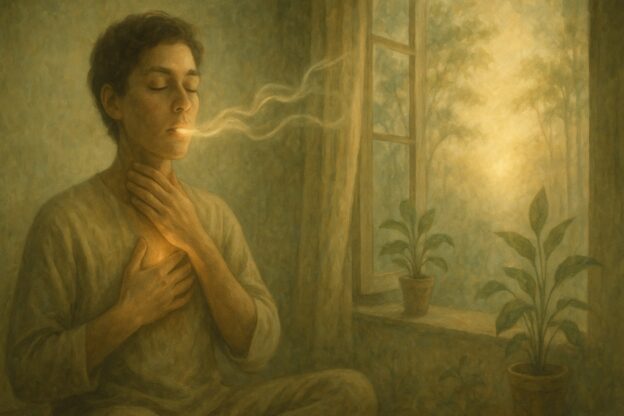
    Here’s the tool: place your hand on your heart. Feel the warmth of your palm against your chest. Feel your heartbeat underneath. That physical contact matters – it’s soothing, it’s grounding, it reminds you that you have a body and it’s right here, right now.

    Then take one slow breath. Just one. Four counts in, six counts out.

    While you do that, say a simple phrase to yourself. Something like “I am safe in this breath” or “The ground is holding me up” or “I can come back to this feeling” or “It’s okay to be exactly who I am.”

    That’s the complete anchor: hand on heart, one breath, simple phrase.

    We practiced this together for several minutes, letting it become something your body remembers. The repetition matters. You’re training your nervous system to associate this gesture with calm. So when you use it later in a moment of stress, your body already knows what to do.

    When you’re out in the world and fear or anxiety shows up – and it will – you can use this anywhere. Middle of a meeting. Standing in line at the grocery store. Lying in bed at night. Nobody else even has to know you’re doing it. Hand on heart, one breath, your phrase. It gives you a way back to yourself.

    If those body-based statements we practiced feel too big or untrue in the moment, that’s fine. Start smaller. “Right now, in this breath, I’m okay.” “I’m learning what safety feels like.” “I don’t have to figure everything out right now.” The point isn’t to convince yourself of something you don’t believe. The point is to interrupt the spiral of anxiety and bring yourself back to this moment, this breath, this body.

    What This Practice Actually Does

    This isn’t positive thinking. We’re not trying to manifest a different reality or pretend problems don’t exist. We’re doing something much more basic: we’re learning to regulate our own nervous systems.

    When you’re stuck in chronic stress or fear, your body is constantly sending danger signals to your brain. Your brain responds by keeping you in high alert. That feedback loop keeps you reactive instead of responsive. You snap at people. You can’t sleep. You make decisions based on anxiety instead of clarity.

    This practice interrupts that loop. It gives your body evidence that right now, in this moment, you’re actually okay. Your nervous system starts to calm. And from that calmer place, you have access to different responses. You can think more clearly. You can respond to people with more patience. You can make better choices about where to put your energy.

    It’s not about achieving some permanent state where you never feel fear again. Fear is a normal human emotion and sometimes it’s giving you useful information. This practice is about building your capacity to return to calm when fear knocks you off balance. It’s about not getting stuck there.

    If You Want to Try This at Home

    You don’t have to do the full 45-minute version, though you certainly can. Here are some ways to work with these ideas at different time scales:

    Five minutes: Find a quiet spot. Sit comfortably. Place your hand on your heart and just breathe. Four counts in, six counts out. When your mind wanders – and it will – just notice and come back to the breath and the feeling of your hand on your chest. That’s the whole practice.

    Throughout your day: Set a reminder on your phone a few times a day to check in with your body. Where are you holding tension? Shoulders bunched up? Jaw clenched? Stomach tight? Just notice it. Then take three conscious breaths and see if you can soften that area even a little bit. You don’t have to fix it completely, just create a little space.

    When anxiety hits: This is when you use the anchor we practiced. Stop whatever you’re doing for ten seconds. Put your hand on your heart. Take one slow breath. Say your phrase. “I am safe in this breath.” That’s it. You can do this a hundred times a day if you need to. Each time, you’re training your body to remember how to come back to calm.

    The full practice: If you want to work through the whole body-based meditation, set aside 45 minutes when you won’t be interrupted. Move slowly through each area – feet and legs, lower belly, upper belly, chest, throat, forehead, top of head. At each spot, breathe and speak the statements we used. Notice what comes up without trying to force anything. Then sit in silence for 5-6 minutes and let it all settle. The silence at the end is just as important as the active parts.

    Keep Showing Up

    Some days this practice will feel profound and you’ll walk away feeling centered. Other days your mind will race the whole time and you’ll feel like you failed at meditation. Both of those experiences are normal. Both are part of the practice.

    The point isn’t perfection. The point is showing up and trying. Each time you practice returning to calm, you’re strengthening that capacity. It’s like building muscle – you don’t see results after one workout, but consistent practice changes things.

    The world is going to stay complicated. We can’t control that. But we can build our own ability to find moments of calm and clarity, even when everything outside is chaotic. And when you show up in the world from a place of relative calm instead of constant reactivity, you bring something different to your interactions. You respond instead of reacting. You have more patience. You make better decisions.

    That matters.

    A Reminder

    If you were at the service on Sunday, hopefully this helps you remember what we did together and gives you ways to keep working with it. The practice doesn’t end when the meditation ends. It’s something you carry with you.

    If you weren’t there, consider this an invitation. You don’t need any special training or equipment or beliefs. You just need some time and a willingness to notice what’s happening in your own body.

    Your breath is always with you. Your body is always here. You can place your hand on your heart whenever you need to remember that you know how to find your way back to calm.

    That’s always available.

  • Coming Alive: When You Stop Playing Small

    Coming Alive: When You Stop Playing Small

    A journey into authentic expression and the courage to be fully yourself


    There’s a question I’ve been sitting with lately, one that seems to follow me through quiet morning moments and late-night reflections: What if the most radical thing we could do is simply stop hiding?

    Not hiding from danger or real threats, but hiding from our own aliveness. Hiding from the parts of ourselves that want to create, to express, to take up space in this world without apology. I’m talking about that specific kind of hiding we do when we dim our enthusiasm, ration our joy, and keep our authentic selves locked away in some internal safe house.

    Last Sunday, during our community gathering, we explored this together—this practice of coming alive. What emerged wasn’t just a meditation, but a recognition of how many of us have been living in the shadows of our own potential, waiting for permission that no one else can give us.

    The Weight of Playing Small

    Let me start here, with you, right now.

    Take a moment and notice: Where are you as you read this? Feel your body in this space. Place one hand on your heart, one on your belly if that feels comfortable. Notice your breath—not to change it, just to acknowledge it.

    Pause here. Really do this. I’ll wait.

    Now, with that same gentle attention, ask yourself: What part of my authentic self have I been keeping small?

    The question might sting a little. It does for most of us. Because if we’re honest—really honest—we all have parts of ourselves we’ve learned to keep on a tight leash. The enthusiastic part. The creative part. The part that wants to try new things, speak up, take risks, be seen.

    We’ve learned to do this for what feel like good reasons. Maybe our excitement was too much for the adults around us when we were young. Maybe we tried to shine once and got burned. Maybe we absorbed the message that being “too much” is dangerous, that wanting things is selfish, that expressing ourselves fully might threaten the people we love.

    But here’s what I’ve been learning, both in my own healing and in witnessing others: The very parts of ourselves we’ve been taught to hide are often the parts that are most alive, most authentic, most desperately needed in this world.

    The Sacred Practice of Recognition

    In our tradition, we talk about plant medicine as a teacher—not because it gives us mystical insights we couldn’t access otherwise, but because it creates the conditions for us to see clearly what’s already there. Ayahuasca doesn’t plant foreign wisdom in us; she reveals the wisdom we’ve been carrying all along.

    This practice of coming alive works the same way. We’re not trying to become someone new. We’re recognizing who we already are beneath the layers of protection, performance, and people-pleasing.

    So let’s practice this recognition together.

    Right now, I want you to ask your body a question: “What in me wants to come alive?”

    Don’t think your way to an answer. Feel your way to it. Maybe there’s a flutter in your chest when you think about that creative project you’ve been putting off. Maybe your hands tingle when you imagine finally having that important conversation. Maybe your whole body lights up when you think about expressing yourself more fully in some area of your life.

    Take a moment here. Let yourself actually feel into this question.

    Notice and celebrate whatever sensations arise. These physical responses aren’t random—they’re your body’s wisdom pointing you toward what’s true.

    The Voices That Keep Us Small

    As soon as you start to feel into what wants to emerge, notice if other voices start talking. They might sound practical: “That’s not realistic.” “I don’t have time for that.” “I need to focus on more important things.”

    Or they might sound spiritual: “I’m still healing, so I should wait.” “I need to work on myself more first.” “My ego is just trying to get attention.”

    These voices aren’t necessarily wrong, but they’re also not necessarily right. Often, they’re just the familiar ways our psyche has learned to keep us safe by keeping us small.

    Here’s the thing about spiritual bypassing—using spiritual concepts to avoid the messiness of actually living. Sometimes the most spiritual thing we can do is let ourselves be fully, authentically alive. Sometimes the deepest healing happens not in waiting until we’re “ready,” but in practicing readiness by showing up as we are.

    Try this: Place both hands on your heart center. Feel yourself giving permission to be big, to be bright, to be exactly as excited as you actually are.

    Say these words, either out loud or silently, and notice what happens in your body:

    “I give myself permission to shine.”

    “My joy is welcome here.”

    “I am ready to stop playing small.”

    Feel the real feelings that come with speaking honestly about yourself. Feel how your body might relax when you stop performing and start being genuine.

    The Practice of Expanding

    What would it actually look like to express the part of yourself that wants to come alive?

    I’m not talking about dramatic life overhauls or reckless decisions. I’m talking about the small, daily practices of authenticity. The practice of letting your voice carry your real thoughts. The practice of sharing your enthusiasm without immediately downplaying it. The practice of taking up the space you actually occupy instead of trying to shrink yourself to fit other people’s comfort levels.

    Here’s a concrete exercise: Think about one specific way you could express more of your authentic self this week. Maybe it’s sharing an idea you’ve been keeping to yourself. Maybe it’s wearing something that makes you feel more like yourself. Maybe it’s spending time on something that genuinely excites you instead of something you think you “should” be doing.

    Now, instead of just thinking about it, feel into it. What would it feel like in your body to actually do this thing? Maybe your chest opens up. Maybe your shoulders relax. Maybe you feel lighter, more energized, more present.

    Let yourself dream into it for a moment. What would your day look like if you let this part of yourself have more space? How would you move through the world? What would change in how you speak, how you laugh, how you show up?

    Really pause here and let yourself feel into this possibility.

    The Community of Aliveness

    One of the most beautiful things about gathering in community—whether it’s our Sunday services or simply reading this blog alongside others who are on similar journeys—is realizing we’re not alone in this struggle to be authentic.

    Your decision to stop playing small doesn’t just serve you. It gives other people permission to do the same. Your willingness to be genuinely excited about something creates space for others to access their own enthusiasm. Your courage to express yourself authentically makes authenticity more possible for everyone around you.

    This isn’t just feel-good philosophy. It’s practical psychology. We learn how to be human by watching each other be human. When we model genuine expression, we teach it. When we practice owning our joy without apology, we make that skill available to our families, our communities, our world.

    The Ceremony of Daily Aliveness

    In our church, we often talk about the sacred nature of ceremony. But ceremony isn’t just what happens when we gather with plant medicine or in formal spiritual settings. The ceremony is also your creative life, your relationships, the daily practice of being authentically, unapologetically alive.

    Every time you choose to express something real instead of something safe, you’re engaged in ceremony. Every time you let yourself be excited about something without immediately minimizing it, you’re practicing the sacred. Every time you take up space as your actual self instead of a performed version of yourself, you’re participating in the healing of the world.

    Before we close, let’s make a commitment together—not to perfection, not to dramatic transformation, but to bringing awareness to the lies we tell ourselves about why we need to stay small. A commitment to at least allowing the possibility of beauty, of blooming into a life of joy.

    Place both hands on your heart one more time. Feel all that aliveness, all that possibility, all that joy that you’ve been touching as you’ve read this. Feel yourself supported by this community, by everyone who has also chosen the path of authentic expression, the path of creative courage, the path of unapologetic aliveness.

    Carrying This Forward

    As you finish reading, take one more conscious breath. Feel how you can carry this energy with you—this permission to be excited, to be creative, to be fully, brightly yourself.

    The practice isn’t about becoming someone new. It’s about having the courage to be who you already are. It’s about recognizing that your authentic self—your joy, your enthusiasm, your unique way of seeing and being in the world—isn’t too much. It’s exactly what’s needed.

    When you’re ready, wiggle your fingers and toes if you need to, stretch if that feels good, and return fully to your day while keeping all of this aliveness burning bright inside you.

    Your assignment, should you choose to accept it: Choose one small way to express more of your authentic self this week. Not as a grand gesture, but as a gentle practice. Notice what it feels like in your body when you stop hiding and start living.

    May you go forward with the courage to be authentic. May you practice honest expression in your daily life. May you know that being genuine is a skill that serves everyone.

    And may you remember: You are not too much. Your enthusiasm is not too much. Your dreams are not too much.

    You are exactly the right amount of you.


    What wants to come alive through you? Share your reflections in the comments below, or simply carry them with you as a secret light as you move through your day.

  • The Fish Dreaming of Water: Why Loneliness is Information, Not a Verdict

    The Fish Dreaming of Water: Why Loneliness is Information, Not a Verdict

    Have you ever felt desperately alone in a crowded room? I have. And I’m willing to bet that if you’re reading this, you have too. There’s something about that particular brand of isolation—the kind that settles in your chest like a weight—that makes you question everything about yourself and your place in the world.

    But what if I told you that loneliness isn’t actually the problem you think it is?

    When Your Heart Speaks, Are You Listening?

    Picture this: you’re walking barefoot and step on something sharp. The pain shoots through your foot instantly, and without thinking, you lift it away from whatever hurt you. You don’t curse your nervous system for being broken. You don’t wonder why you’re so sensitive. You recognize that pain as crucial information—your body’s way of protecting you from further harm.

    So why, when loneliness shows up, do we treat it like a personal failing instead of valuable data?

    Here’s what researchers have discovered that changed everything for me: emotions aren’t random visitors crashing our mental party. They’re sophisticated information systems, arising from deep brain structures that constantly evaluate our environment and flag what needs our attention. When we feel joy, our system is saying “more of this, please.” When we feel fear, it’s saying “pay attention—something important is happening here.”

    And when we feel lonely? Our inner wisdom is gently tapping us on the shoulder, whispering, “Hey, something in your emotional or social world needs some love.”

    The Fish Who Forgot

    I’ve spent countless hours in deep introspection, in ceremonies, in therapy rooms, wrestling with this question of connection. And here’s what keeps coming back to me: we live surrounded by an ocean of love and connection. It’s infinite, expansive, always available. Yet loneliness persists.

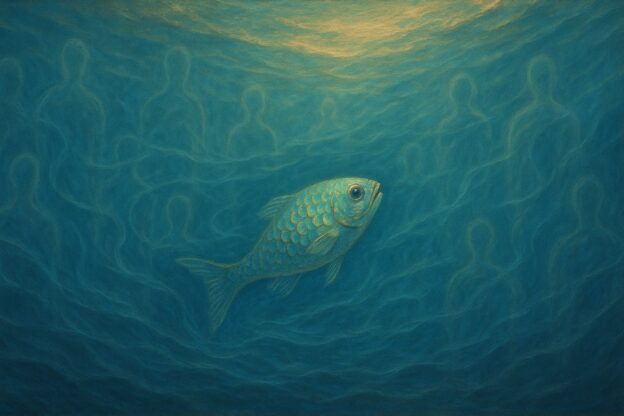
    It’s like a fish dreaming of feeling wet while swimming in the vast ocean.

    Now, before you roll your eyes and think I’m about to blame you for your pain—hold on. This isn’t about fault or shame. Scientists who study intimacy and connection have found something fascinating: many people who struggle with loneliness aren’t actually lacking in social opportunities. Instead, they’ve learned to fear the very thing they most desire.

    Think about it. How often do we reject invitations because we’re “not in the mood”? How often do we keep conversations surface-level because going deeper feels too risky? How often do we choose familiar isolation over uncertain connection?

    I’m not judging—I’ve done all of these things. But what if our loneliness isn’t happening to us, but through the walls we’ve built to protect ourselves?

    The Fear Beneath the Fear

    Let me ask you something that might sting a little: what are you really afraid of when it comes to connection?

    Maybe you’re afraid of being truly seen and found lacking. Maybe you’re terrified of opening up only to be abandoned again. Maybe you’ve convinced yourself that staying guarded is safer than risking your heart.

    Research shows us something both validating and challenging: the emotions we struggle to manage and our sense of belonging are deeply connected to loneliness. When we avoid difficult feelings or lack a sense of social identity, we often end up more isolated.

    Here’s the thing about fear-based protection—it creates exactly what it’s trying to prevent. Researchers call this the fear-avoidance cycle: we avoid connection to protect ourselves from rejection, but the avoidance itself creates more disconnection, which feeds more fear, which drives more avoidance. Round and round we go, like a fish swimming in circles, wondering why the ocean feels so small.

    But what if this pattern isn’t evidence that you’re broken? What if it’s just information about how your nervous system learned to survive?

    The Mirror That Shows Us Everything

    Here’s where I’m going to say something that might sound harsh at first, but I promise there’s love underneath it: the most empowering thing you can do for your loneliness is to take complete responsibility for it.

    Not because you’re to blame. Not because you chose to be hurt. But because responsibility is where your power lives.

    Psychologists have found that people who can acknowledge their role in shaping their life circumstances—without self-attack—are the ones who actually change. When you can honestly look at your patterns and say, “Okay, I see how I’ve been contributing to this cycle,” you’ve just identified something you actually have the power to shift.

    What would it look like if you owned your loneliness completely? What hard truths would you have to swallow? Maybe that you’ve been keeping people at arm’s length because intimacy feels terrifying. Maybe that you’ve been waiting for others to prove they won’t hurt you instead of learning to trust your own resilience.

    This isn’t about self-blame—it’s about recognizing that you’re not a victim of your circumstances. You’re a creative, powerful being who learned certain strategies to protect yourself, and now you get to choose new ones.

    Becoming Your Own Best Friend

    Self-awareness, researchers tell us, is like stepping back and observing your thoughts and feelings as they unfold. It sounds simple, but it’s profound. Most of us are so caught up in our emotional storms that we forget we can watch them pass.

    I remember the first time I really sat with my loneliness instead of running from it. It felt like looking in a mirror that showed me everything—not just the pretty parts, but the scared, desperate, needy parts too. The parts that wanted to be loved so badly they’d rather hide than risk being seen and rejected.

    Crazy people don’t know they’re crazy, right? Well, lonely people often don’t know how they’re creating their own isolation. Looking in that mirror and saying, “Oh wow, I see what I’ve been doing here,” isn’t comfortable. But it’s the beginning of everything.

    Can you be curious about your patterns instead of judgmental? Can you ask your loneliness what it’s trying to tell you, the way you’d listen to a worried friend?

    The Courage to Be Seen

    Here’s something beautiful that science has confirmed: loneliness isn’t really about how much time we spend alone or with others. It’s about the quality of our experience when we’re by ourselves and when we’re with people.

    The cure for loneliness isn’t necessarily finding more people to fill your calendar. It’s about showing up authentically—first with yourself, then with others. It’s about risking being real instead of being perfect.

    People who fear intimacy often don’t actually want to avoid closeness—they usually long for it deeply. But they’ve learned to push people away or sabotage relationships because the risk of being hurt feels too great.

    What if the very thing you’re protecting yourself from—being truly known—is actually the key to the connection you’re craving?

    When You’re Ready to Swim

    One of the most effective approaches for breaking out of avoidance patterns is gradually exposing yourself to the very things you fear, with compassion and support. You don’t need a therapist to start this process (though they can be wonderfully helpful). You just need courage and a willingness to be gentle with yourself as you learn.

    When loneliness visits, instead of immediately trying to escape it or judge it, try asking: “What are you here to teach me?” Maybe it’s pointing out that you need more authentic connection. Maybe it’s highlighting that you’ve been wearing a mask for so long you’ve forgotten who you really are underneath.

    What if you started with one small act of authenticity today? One real conversation instead of small talk. One moment of vulnerability instead of performance. One choice to show up as you are instead of who you think you should be.

    The Ocean Was Always There

    Your brain is literally designed to help you navigate connection and belonging—it’s constantly evaluating your social environment and guiding you toward what you need. But fear can hijack this beautiful system, making you see threats where there might be invitations.

    All the healing work we do—therapy, meditation, deep personal reflection—can help us recognize these patterns and shake us loose from old stories. But ultimately, the choice to step into authenticity, to risk being seen, to trust that you’re worthy of love exactly as you are—that choice is always yours.

    Here’s what I’ve come to believe: the ocean of connection and love isn’t something you have to find or earn or become worthy of. You’re already swimming in it. Loneliness is just the dream of separation, and like all dreams, you can wake up from it.

    The Invitation

    So here’s my question for you, friend: What truth are you ready to claim today? What wall are you willing to let down? What risk are you ready to take in service of real connection?

    The water is all around you. You’ve never actually been alone—you’ve just been swimming with your eyes closed, forgetting that you belong to this vast, loving ocean of existence.

    Maybe it’s time to open your eyes and start swimming toward what your heart has always known is possible. The ocean is waiting for you to remember you were never separate from it at all.

    What if today is the day you stop dreaming of water and start diving deep?

  • Coming Home to Your Voice

    Coming Home to Your Voice

    When was the last time you heard your own voice—really heard it? Not the voice you use to navigate meetings or make small talk, but your authentic voice, the one that emerges when you’re not trying to be anyone other than exactly who you are.

    Most of us have spent years perfecting the art of leaving ourselves. We’ve learned to live in our heads, analyzing and strategizing and protecting. We’ve mastered projection—making our feelings someone else’s responsibility. We’ve become experts at denial—pretending we don’t feel what we feel, don’t want what we want, don’t know what we know. And perhaps most cleverly of all, we’ve learned to live in fantasy—anywhere but here, in the messy, imperfect, completely authentic reality of who we are right now.

    This disconnection isn’t our fault. Our minds developed these strategies to protect us, often when we were very young and truly needed protection. But somewhere along the way, the very mechanisms that kept us safe began keeping us small, keeping us disconnected from our own authentic experience.

    Why Your Voice Matters

    Your voice is immediate and honest—it can’t lie. Unlike your thoughts, which can spin elaborate stories, or your actions, which can be performed, your voice reveals exactly where you are in relationship to yourself and your willingness to take up space in the world.

    Think about it: when you speak in a meeting, do you make yourself smaller so you don’t stand out? When you laugh, do you hold back so you’re not too loud? When you disagree with someone, do you swallow your words to keep the peace? These aren’t just vocal habits—they’re patterns that show up everywhere in your life.

    If you make yourself smaller with your voice, where else do you make yourself smaller? If you’re afraid to be heard in conversation, where else do you stay silent when you have something valuable to say? If you judge your own sound as wrong somehow, where else do you treat yourself as not good enough?

    Working with your voice offers a direct path back to authentic self-expression because it’s so immediate. Every time you choose to sound, even when you’re afraid, even when you’re judging yourself, even when it feels uncomfortable—you’re choosing yourself. You’re choosing presence over hiding, authenticity over safety.

    The Psychology of Vocal Hiding

    Most of us learned very early that our full expression wasn’t always safe or welcome. Maybe you were told to be quiet when you expressed excitement. Maybe you learned that your needs were too much, your emotions too big, your authentic expression somehow wrong. Maybe you were laughed at, criticized, or ignored when you tried to share what was real for you.

    So you learned to close. You learned to control. You learned to present a version of yourself that you thought would be more acceptable, more lovable, more safe. But here’s the thing about closing: when we shut down our voice to avoid judgment, we also shut down our capacity for authentic connection. When we make ourselves smaller to stay safe, we also make ourselves less alive.

    The beautiful paradox is that the very vulnerability we’ve been trying to avoid—the risk of being heard, of taking up space, of being real—is actually the doorway back to ourselves. And you can start practicing this doorway anywhere, anytime, with nothing more than your breath and your willingness to make sound.

    Three Practices to Reconnect with Your Authentic Voice

    Practice 1: The Foundation Hum

    Find a private space where you can make sound without worrying about being heard. Sit comfortably and let your lips come together gently. Allow a simple “mmm” sound to emerge on your exhale. This is the most basic sound humans make—we hummed before we learned words, before we learned to worry about how we sound.

    Give yourself 2-3 minutes to explore this hum. You might hold a single tone, or let it wander into a simple melody. Find your own sound, your own rhythm. Don’t worry about it being beautiful or correct—worry about it being yours.

    Notice what happens in your body. Does your jaw tighten? Do you find yourself making the sound smaller? Do you feel self-conscious even though you’re alone? These reactions are completely normal—they’re information about how you’ve learned to relate to your own expression.

    The practice isn’t about getting rid of these reactions. It’s about staying present with yourself even when they arise. It’s about choosing to sound anyway, choosing to express anyway, choosing to show up exactly as you are.

    Practice 2: Opening with Vowels

    Now we’ll work with open vowel sounds—”ah,” “oh,” “ee,” “oo.” Choose whichever feels most comfortable. These sounds require you to open your throat and mouth more fully, which means you’re literally practicing vulnerability in a physical way.

    Let your chosen vowel sound flow out on your exhale for 3-4 minutes. You might explore different pitches, or stay with one tone. You might feel called to go louder, or to stay soft. Follow your authentic impulse, not what you think you should do.

    As you sound, notice what stories your mind tells you about why you should stop, why you should be quieter, why you should be different than you are. Instead of believing those stories, try staying present with the simple act of making sound. Try letting your voice be exactly what it is without trying to fix it or improve it.

    This is vulnerability in action. This is what it feels like to choose authenticity over safety, presence over protection.

    Practice 3: Speaking Your Truth

    For this final practice, speak these words aloud: “I am here, I am real, I am enough.” Start by whispering, then use your natural speaking voice, then speak with full presence and strength.

    As you repeat these words, let yourself feel what it’s like to speak truth into the space around you. Notice if you feel tempted to rush through it, to say it quietly, to add qualifications or explanations. See if you can simply let the words stand as they are—complete, sufficient, true.

    This isn’t about positive affirmations or convincing yourself of something. It’s about practicing the physical act of speaking truth, of taking up acoustic space, of trusting that your authentic expression has value just because it’s yours.

    Making It a Practice

    The journey back to yourself doesn’t happen in one session—it happens moment by moment, choice by choice. Every conversation is an opportunity to practice. Every interaction is a choice point. You can choose to show up authentically, or you can choose to hide behind old patterns.

    Start small. In your next phone call, notice if you’re making your voice smaller or bigger than feels natural. In your next meeting, pay attention to whether you’re editing your words before you speak them. When you laugh, notice if you’re holding back or letting it fully emerge.

    This isn’t about becoming louder or more dramatic. It’s about becoming more real. It’s about trusting that your authentic voice—whatever it sounds like, however it emerges—deserves to be heard.

    Your voice is not just the sound that comes out of your mouth. Your voice is your presence, your truth, your willingness to be real in a world that often rewards pretending. You don’t have to wait until you’re perfect to use it. You can start right now, exactly as you are, in this moment.

    Because this moment is the only moment where choice lives. This moment is where you get to decide: will you show up or will you hide? Will you speak your truth or will you say what you think others want to hear? Will you come home to yourself or will you stay lost in old patterns?

    The choice is always yours. The moment is always now. Your voice is always available.

  • Grieving with Love

    Grieving with Love

    Grief is something we all go through at different points in our lives. It’s pretty unavoidable. I’ve experienced it multiple times—through the loss of relationships, friends, loved ones—but this time feels different. Maybe not softer, but clearer. I’ve been reflecting on how I’m allowing myself to move through it now, in a way that feels much healthier than I ever could in the past.

    In the past, I didn’t want to feel the sadness. I was scared of what was on the other side of it. So I numbed. I distracted myself. I avoided the grief and all the ways it tried to reach me—because I thought grief meant loss, and loss meant something was gone forever.

    But I’ve learned through ceremony and through time that the sadness is not separate from the beauty. When I allow myself to feel the sadness, I also allow myself to feel the love. The memories. The joy. When I cut myself off from grief, I was also cutting myself off from all of that. I’ve learned to sit with my emotions. To feel the feelings I’m afraid to feel. Not to fix them or label them, not to blame or control—but to allow.

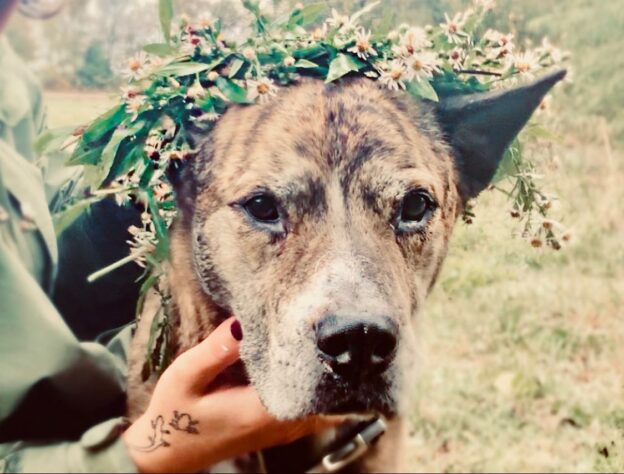
    The grief I’m feeling now is deep. I just lost my best friend of over 16 years—my dog, Lily. She was with me through the darkest parts of my life. She was the one stable, good thing in a very chaotic journey. And somehow, she stayed by my side long enough to see me to the happiest place I’ve ever been. It feels like she held on to make sure I got here. That says something about her spirit. About her love.

    But it wasn’t a job. She didn’t stay because she had to. She stayed because she loved me. Fully. Unconditionally. She taught me what love looks like when it doesn’t ask for anything in return.

    Her loss is something I dreaded from the moment I got her. I knew this day would come. But I also know now I don’t want to grieve in a way that makes me forget. I don’t want to be afraid to say her name out loud. I don’t want to avoid the pictures or the memories just because they bring tears. I want to feel it. Because when I feel it, I feel her. I feel the love. I feel the connection that still exists, even if she’s not here in the way she used to be.

    “It came to me that every time I lose a dog they take a piece of my heart with them, and every new dog who comes into my life gives me a piece of their heart. If I live long enough, all the components of my heart will be dog, and I will become as generous and loving as they are.”

    Grief comes in waves. That metaphor really resonates with me. At first, the waves crash over you one after another, with no space to breathe. Everything reminds you of what you’ve lost. And all you can do is hold on—to a photo, a collar, a soft memory.

    Over time, the waves are still big, but they come with more space between them. And between the waves, there is life. There is breath. There are small, ordinary moments where you remember how to laugh or make dinner or take a walk without crumbling.

    Eventually, you learn to recognize the waves when they come. You brace for them. They still crash, but you know you’ll make it out the other side. Soaked, heart aching—but alive.

    And the waves never really stop. I’m learning not to wish they would. Because if they stopped, it would mean I stopped remembering. I stopped feeling. And I don’t want that. I want the waves. I want the tears. I want the memories that bring me back to her.

    This grief is not a wound to be closed. It’s love continuing to move through me. And I’m letting it.

  • Stepping Into Our Power

    Stepping Into Our Power

    There’s a fire inside you🔥
    Can you feel it?

    Sometimes it flickers quietly, an ember resting in your belly, waiting for you to notice. Other times it burns hot—urgently, unmistakably—calling you to act, to speak, to become. This fire is the energy of your third chakra, Manipura, your solar plexus, the seat of willpower, action, and self-definition. It is where your confidence is born and your boundaries are drawn. It is where the “I can” of your soul lives.

    To step into our power is to tend this fire—not to dominate, not to control others, but to rise into a clear, grounded presence in our own lives. This is not just about feeling empowered—it’s about choosing, every single day, to live from the inside out. And that choice? It’s both the most sacred and the most practical thing we can ever do.

    And yet, how often do we forget we even have a choice?

    So many of us carry stories that taught us to dim our light, to doubt our inner voice, to be “good” rather than real. We internalize beliefs that say our power is dangerous, selfish, or something to earn rather than something we inherently are. And so, we shrink. We defer. We wait.

    But no one is coming to crown us. There is no external source of permission. The moment we realize that, something ancient within us stirs. That’s the moment we begin.

    So the question is not just, How do I find my power?
    But rather, Am I ready to choose it, every single day?


    Resistance: The Gatekeeper of Growth

    And of course, that’s also when resistance shows up.

    Resistance is not the enemy—it’s the gatekeeper. Every time we move toward growth, toward action, toward change, we will meet resistance. It might show up as procrastination, self-doubt, imposter syndrome, or even just an overwhelming tiredness that says, “Maybe later.” But these blocks don’t mean we’re on the wrong path. They mean we’re standing on sacred ground. They mean something old is dying, and something new is trying to be born.

    Our job isn’t to fight resistance, but to understand it—and then move anyway. Because stepping into our power isn’t about waiting for fear to vanish. It’s about honoring that fear and choosing to act with love and intention anyway.

    Imagine it like this: every step forward in your power is a step away from the comfort zone of who you used to be. That part of you—the one that learned to stay small to stay safe—is not going to give up its job quietly. So when you feel the friction, don’t freeze. Feel it. Then move anyway.

    Because power is not a feeling. It’s a choice.


    Power and Responsibility: The End of Blame

    One of the clearest signs that we are truly stepping into our personal power is when we stop outsourcing our lives to blame. When we say, “I didn’t choose what happened to me, but I choose what I do with it now,” we stop being a passive observer of our life and start becoming its conscious author.

    That doesn’t mean minimizing our pain or skipping over our stories. It means realizing that we are not defined by them. True responsibility—response-ability—isn’t about fault. It’s about reclaiming our capacity to choose. To create. To shift. This is the foundation of true manifestation—not passive wishing or waiting for the universe to rearrange itself for us—but deliberate, grounded, soulful action aligned with who we truly are.

    And this is how we begin to manifest—not by wishing or waiting, but by showing up for our lives with intention and clarity. Manifestation is less about wishful thinking, and more about alignment—between who we say we are and how we actually live.


    Walking Into Your Power

    This is not theoretical. This is practical magic. And it shows up in the tiniest of ways.

    You don’t need to climb a mountain or start a business to stand in your power. Some days, it looks like going for a walk with intention—feeling your feet on the earth and breathing deeply into your belly, walking not to get somewhere, but to return to yourself. That, too, is claiming space.

    Other days, it looks like learning something new, even if it’s uncomfortable. Challenging yourself to step outside the familiar. Letting yourself be a beginner again. Asking: Where have I gone stagnant? What part of me is ready to evolve? And then honoring that part with action.

    Stepping into our power is often less about big breakthroughs and more about small, daily alignments—choices that honor our deeper truths. It’s in the conversations where we speak up instead of staying silent. It’s in asking for what we need, or lovingly saying no. It’s in waking up to the ways we’ve been numbing, avoiding, or hiding—and choosing, even in micro-movements, to come back into presence.

    So many of us are waiting for the fear to go away before we act. But the truth is, we often have to act with the fear. Standing in your power means trusting your voice, even when it shakes. Trusting your vision, even when no one else sees it yet. It means moving forward, not because you’re fearless, but because you’re ready to stop betraying yourself.

    And as we do this—one choice, one breath, one action at a time—something inside begins to shift. We stop blaming. We stop waiting. We stop outsourcing our authority to the past or the people around us. And instead, we start cultivating a kind of deep-rooted self-respect that no external validation can give us.

    This is where growth begins to feel like truth, not performance. We are no longer pretending to be confident—we are simply being ourselves.

    This journey is not linear. It’s not a checklist. It’s a spiral—sometimes returning to old lessons, but from a new place of awareness. There is no final destination here. There is only deepening. There is only unfolding. And what power looks like for you may not look like it does for anyone else.

    For some, standing in power may be loud, expressive, and full of movement. For others, it may be quiet, rooted, and calm. For some, it may look like stepping onto a stage. For others, it’s walking away from one. The expression of power is as unique as each of us, because we are all creators—but what we create will vary wildly.

    Some of us are here to create art. Others are here to create families, systems, gardens, businesses, healing spaces, or change. But the act of choosing to live from our fire—from that place of courage, clarity, and self-trust—is a universal journey.


    The Forever Journey

    And it is a forever journey.

    So if you’ve been feeling stuck, stagnant, or unsure, let this be your invitation: You are allowed to want more. You are allowed to change. You are allowed to outgrow who you once were. And you are more powerful than you’ve been led to believe.

    Start small if you need to. Move your body. Write down your desires. Try something new. Say what you really feel. Stop apologizing for taking up space. Don’t wait for the fear to go away—thank it for its concern, and keep moving anyway.

    You are the fire. You are the source. You are the author.
    And every moment is a chance to choose your power again.

    Let it be practical. Let it be messy. Let it be spiritual. Let it be yours.

    Because when we stop waiting and start choosing, when we stop blaming and start becoming, we ignite something far greater than confidence—we ignite purpose. We become creators of our lives, not just consumers of our circumstances.

    That is what it means to step into your power.
    Not once. But again. And again. And again.

    And with each step, you remember:
    The light you’re looking for? It was always in your own hands. That is power. That is purpose. That is the fire of the third chakra turning from ember to flame.


    With you in the fire, always 🔥🕊️✨
    Two Birds Church

  • Embracing All of You: A Journey Through the Chakras

    Embracing All of You: A Journey Through the Chakras

    Have you ever caught yourself staring at your reflection, not quite recognizing the person looking back? I have. There I was, exhausted after a day of trying to be everything for everyone, when I realized I’d forgotten how to simply be with myself.

    That moment led me down a path I never expected—a journey through the ancient wisdom of chakras that ultimately taught me what self-acceptance truly means. Not the Instagram-perfect version, but the raw, beautiful mess of embracing every part of who we are.

    The Dance of Self-Acceptance

    Self-acceptance isn’t a destination—it’s a dance. Some days, the rhythm flows easily; other days, we stumble. But here’s what I’ve learned: those stumbles are just as important as the graceful steps.

    When I first began exploring what it meant to accept myself, I was shocked to discover how conditional my self-love had become. Good day at work? I deserved kindness. Made a mistake? Cue the internal critic.

    Sound familiar?

    Psychologist Albert Ellis had it right all along—we deserve acceptance simply because we exist. Not because we achieved something. Not because someone validated us. Just because we’re here, breathing, trying our best.

    Finding My Way Through the Chakras

    What changed everything for me was discovering the chakra system—those seven energy centers that run from the base of our spine to the crown of our head. Each one offered a different lens through which I could understand and embrace myself.

    Let me take you with me on this journey.

    Rooting in Self-Acceptance

    Close your eyes for a moment. Feel the weight of your body against whatever is supporting you right now. That connection, that grounding—that’s your root chakra speaking.

    When my life fell apart three years ago (unexpected job loss, relationship ending, the works), I couldn’t sleep. Couldn’t eat. My entire foundation felt shattered. A wise friend suggested I start with the basics: “Can you accept that you need safety? That you deserve to belong?”

    Such simple questions. Such difficult answers.

    I began with small rituals—walking barefoot in grass, cooking nourishing meals, creating a sanctuary in my bedroom. Slowly, I started to accept my fundamental needs without shame. Isn’t it strange how we judge ourselves for the very things that make us human?

    What aspects of your basic needs are you still judging yourself for? What would change if you simply said, “Yes, I need this, and that’s perfectly okay”?

    Feeling Without Filtering

    Just above the root chakra sits the sacral center—the home of our emotions, creativity, and desires. Oh, how I used to police this part of myself!

    “Don’t feel too much,” I’d tell myself. “Don’t want things too intensely.” As if the volume of my emotions and desires somehow made me too much for the world.

    The turning point came during a weekend painting workshop. Asked to create without planning, I stood frozen before the canvas. The instructor gently said, “There are no wrong emotions, no wrong expressions here.”

    I cried as I painted that day—great, heaving sobs as colors exploded across my canvas. Not because it was good art (it definitely wasn’t), but because for the first time in years, I wasn’t filtering my feelings through what I thought was acceptable.

    When was the last time you let yourself feel without editing? What creative impulses have you been ignoring because they seem impractical or unnecessary?

    Standing in Your Power

    The solar plexus chakra, glowing yellow at your core, houses your sense of personal power and worth. This was where I faced my harshest inner critic.

    A journal entry from that time reads: “Why is it so easy to see strength in others and only weakness in myself?”

    Building self-acceptance here meant acknowledging both my capabilities and my limitations without letting either define me completely. It meant recognizing that my worth wasn’t tied to achievement but to my essential being.

    I started collecting evidence of my competence—not to boost my ego, but to counter the false narrative that I was somehow fundamentally lacking. Simultaneously, I practiced saying, “I don’t know how to do this yet, and that’s okay”—emphasizing the “yet” and the “okay” with equal importance.

    Where in your life are you still attaching your worth to your performance? What would shift if you separated who you are from what you do?

    The Heart of the Matter

    At the center of it all sits the heart chakra—the bridge between our physical and spiritual selves. Here is where self-acceptance transforms into something profound: self-compassion.

    Learning to treat myself with the same kindness I would offer a dear friend didn’t come naturally. I had to practice phrases that once felt impossibly indulgent: “This is difficult. You’re doing your best. How can I support you right now?”

    The practice of Lojong taught me to breathe in suffering and breathe out compassion—first for others, then gradually for myself. There was something revolutionary about acknowledging pain without trying to fix it immediately.

    I wonder—if your heart could speak directly to you, what words of comfort would it offer? And would you allow yourself to receive them?

    Speaking Your Truth

    The throat chakra taught me that self-acceptance includes honoring my voice—even when it shakes, even when it contradicts others, even when it evolves and changes its mind.

    For years, I swallowed words that needed to be spoken. I agreed when I meant to decline. I stayed silent when something mattered deeply to me. Each time, I rejected an essential part of myself.

    Learning to express my truth began with small practices—morning pages where I wrote without censoring, conversations with trusted friends where I practiced saying difficult things, moments of choosing authenticity over harmony.

    What truths have you been holding back? What parts of your authentic self are still waiting to be expressed?

    Trusting Your Vision

    Between your eyebrows sits the third eye chakra—your center of intuition and inner knowing. Self-acceptance here means trusting the wisdom that comes from within, not just from external sources of validation and information.

    I had become so accustomed to second-guessing myself that I’d developed the habit of seeking multiple opinions before making even minor decisions. Learning to quiet the noise and listen to my own inner guidance took practice.

    Meditation helped—those moments of stillness where I could distinguish between fear-based thoughts and true intuition. So did documenting the times when I had ignored my gut feeling and later regretted it.

    How often do you trust your initial instincts? What helps you distinguish between anxiety and intuition?

    Connecting to Something Larger

    At the crown of your head, the seventh chakra opens you to connection with something greater than yourself. Here, self-acceptance expands to include your place in the universe—both your significance and your smallness.

    For me, this meant acknowledging that I am simultaneously a unique expression of life and just one small part of an immense whole. There’s such freedom in that paradox.

    I find this connection in different ways—sometimes in formal meditation, sometimes while stargazing, sometimes in moments of profound connection with others. Each experience reminds me that I belong to something vast and meaningful.

    Where do you find your sense of connection to something larger than yourself? How does that perspective shift how you view your individual struggles?

    The Ongoing Journey

    This path through the chakras isn’t linear—it’s a spiral that continually brings me back to areas that need attention and healing. Some days I’m firmly grounded in self-acceptance; other days I struggle to remember the most basic lessons.

    But that’s the point, isn’t it? Self-acceptance includes accepting that we’re works in progress, always evolving, always learning.

    The most profound gift of this journey has been the space to be imperfectly human—to make mistakes, to have contradictory feelings, to need both connection and solitude, to be both strong and vulnerable.

    So I invite you to consider: What would change in your life if you could truly accept all parts of yourself? What would you do differently? How would you speak to yourself? What would you stop apologizing for?

    The journey toward self-acceptance isn’t about reaching perfection—it’s about embracing the beautiful complexity of being human. And from where I stand now, that complexity is what makes us most worthy of love, most capable of connection, and most authentically ourselves.

    Take a deep breath. Feel the air filling your lungs. As you exhale, release just a bit of what no longer serves you. You’re exactly where you need to be on your own journey of self-acceptance. And I’m right here, walking alongside you.

  • Nature’s Sacred Balance: The Dance of the March Equinox

    Nature’s Sacred Balance: The Dance of the March Equinox

    This morning, I woke before the sun. There was no alarm, just a gentle stirring within that pulled me from sleep. Wrapping myself in silence, I stepped outside and waited. As the first light began to break across the horizon, I felt it—that perfect equilibrium in the air, the beautiful tension between night and day that occurs only twice a year.

    The March equinox is upon us.

    Have you ever noticed how differently the world feels during these transition points? There’s a particular quality to the light, a certain resonance in the air that speaks of potential and possibility. This isn’t just poetic imagination—it’s a tangible shift that cultures throughout history have recognized and honored.

    The Cosmic Dance of Balance

    What makes the equinox so special is its perfect symmetry—a brief, precious moment when day and night stand as equals, neither dominating the other. Light and shadow, perfectly balanced. In our world of extremes and excesses, these moments of equilibrium feel increasingly rare and sacred.

    I’m drawn to this balance not just for its astronomical significance, but for what it mirrors within my own life. How often do I find myself tilting too far in one direction? Working without rest, thinking without feeling, doing without being? The equinox serves as a cosmic reminder that balance isn’t just nice to have—it’s essential for the healthy functioning of both nature and ourselves.

    And what about you? Where in your life might balance have slipped away? Which parts of yourself have you been neglecting as others demand more attention?

    A Portal Between Worlds

    There’s something mystical about the equinox that transcends scientific explanation. Many traditions speak of this time as a thinning of boundaries—between seasons, between worlds, between different aspects of consciousness. It’s as if the perfect balance creates an opening, a doorway through which transformation becomes more accessible.

    I’ve come to see the equinox as a invitation to step through such a doorway. To leave behind what no longer serves me and welcome what wishes to be born. The earth itself demonstrates this transition, as winter’s dormancy gives way to spring’s emergence. What if we approached our inner lives with the same natural rhythm?

    Harnessing the Equinox Energy

    The question then becomes: how do we work with this powerful cosmic moment? How do we align ourselves with this perfect balance to foster growth and renewal in our lives?

    The answer isn’t found in complex rituals or esoteric knowledge, though these have their place. Instead, it begins with simple presence—with turning our attention inward, listening deeply, and allowing ourselves to be guided by the subtle whispers that emerge when we quiet the noise of everyday life.

    Let me share some practices that have helped me connect with the equinox energy, offered as possibilities rather than prescriptions:

    Setting Sacred Intentions

    When I sit with the question, “What wishes to emerge in my life now?” I’m often surprised by the answers that arise. They’re rarely what my thinking mind would have planned, but they carry a resonance of truth that’s unmistakable.

    Take time on the equinox to listen for these deeper intentions. What is asking to be born in your life? What needs to be released to create space for this new growth? Write these intentions down, speak them aloud, plant them like seeds in the fertile ground of your consciousness.

    Embracing Nature’s Wisdom

    There’s no better teacher of balance and renewal than the natural world. On the equinox, I make it a point to spend time outside, observing the subtle signs of transition—the new buds forming on branches, the early spring flowers pushing through the soil, the changing quality of light.

    These aren’t just pleasant sensory experiences; they’re reminders of the resilience and rhythm that govern all life. As you walk through a park, sit by a stream, or simply stand under the open sky, allow nature’s wisdom to speak to you. What messages does it have for your own process of renewal?

    Meditating on Balance

    Meditation becomes especially powerful during the equinox. I find that focusing on the balance of opposites—inhale and exhale, tension and release, sound and silence—helps me access a deeper state of equilibrium within.

    Set aside time for meditation on the equinox, even if just for a few minutes. As you sit, visualize the equal parts of light and dark, activity and rest, giving and receiving in your life. Where do you notice imbalance? Can you hold those areas with compassion, visualizing them gently shifting toward greater harmony?

    Clearing Space for Growth

    The tradition of spring cleaning reflects the natural impulse to clear away what’s stagnant and make room for fresh energy. This applies not just to our physical spaces but to our mental and emotional landscapes as well.

    What are you ready to release? What thought patterns, relationships, or habits have served their purpose and are now ready to be composted, transformed into nourishment for new growth? The equinox offers perfect energy for this letting-go process, allowing us to shed with grace what no longer serves our highest good.

    Planting Seeds of Possibility

    After clearing comes planting. I find there’s special power in physically planting seeds on the equinox—whether in a garden bed or simply in pots on a windowsill. As I place each seed in soil, I connect it with something I wish to cultivate in my life.

    You might try this practice yourself, speaking your intentions as you plant, knowing that the same life force that will push those seeds toward sunlight is available to nurture your dreams and visions as well.

    Exploring Inner Landscapes Through Journaling

    Our inner worlds are as vast and complex as any external landscape. Journaling helps us map this territory, bringing awareness to patterns and possibilities we might otherwise miss.

    On the equinox, try journaling around themes of balance and renewal. Where do you feel most alive? Where do you feel stagnant? What would bring greater harmony to your days? Let your writing be exploratory rather than declarative, a process of discovery rather than planning.

    Creating Ceremony

    There’s profound power in marking significant transitions with ceremony. This needn’t be elaborate—lighting a candle, creating a small altar with objects that represent what you’re calling in and letting go, or simply sitting in intentional silence can all serve as meaningful rituals.

    The key is presence and intention. What feels authentic to you? What actions or symbols would help you honor this cosmic moment of balance and potential? Trust your intuition to guide you toward ceremony that feels personally meaningful.

    Expressing Creativity

    The creative impulse mirrors the generative energy of spring. During the equinox, I find my creative expression flows more freely, as if the balance of energies opens channels that might otherwise remain constricted.

    Allow yourself to create without judgment or expectation. Paint, write, sing, dance, cook—whatever form calls to you. The act of creating aligns us with the fundamental creative force of life itself, the same force that’s awakening in nature all around us.

    Connecting with Community

    While inner work is essential, we’re not meant to journey alone. Sharing the equinox with others—whether in formal celebration or simple acknowledgment—amplifies its power and reminds us of our interconnection.

    Reach out to friends who might appreciate marking this transition together. Share a meal, exchange thoughts about what you’re each calling in and letting go, support each other’s intentions for the coming season.

    Practicing Gratitude

    In all spiritual work, gratitude serves as both foundation and culmination. Taking time to acknowledge the blessings in your life—both obvious and subtle—opens your awareness to the abundance that surrounds you.

    Each day around the equinox, note specific things you’re grateful for. Include not just what’s easy to appreciate but also the challenges that have shaped you, the lessons that have transformed you, the full spectrum of experiences that make up your rich and complex life.

    The Ongoing Journey

    As the equinox passes and we move deeper into spring, the perfect balance of that moment will shift. The light will continue to expand, the growth will accelerate, the energy will intensify. This too is part of the natural rhythm.

    The goal isn’t to maintain perfect equilibrium at all times—that would be contrary to the dynamic flow of life. Rather, it’s to recognize these moments of balance as touchstones, as reminders of a central harmony we can return to again and again as we navigate life’s inevitable fluctuations.

    The equinox teaches us that balance isn’t static but dynamic, not an achievement but a continuous dance. We learn to move with greater grace between activity and rest, expression and receptivity, connection and solitude—not by rigidly controlling these movements but by surrendering to their natural wisdom.

    As this March equinox approaches, I invite you to pause. To notice. To open yourself to the perfect equilibrium of this cosmic moment and allow it to inform your own journey of renewal. Stand at the threshold between what has been and what will be, between shadow and light, between letting go and becoming.

    In this sacred space of balance, infinite possibilities await. What will you discover there? What will be revealed when you allow yourself to be held in perfect equilibrium, if only for a moment?

    May this equinox bring you clarity, renewal, and the courage to embrace both the light and shadow of your magnificent journey. The doorway stands open. Step through.

  • Loving Yourself This Valentine’s Day: Techniques and Ideas for Self-Care and Self-Love in February

    Loving Yourself This Valentine’s Day: Techniques and Ideas for Self-Care and Self-Love in February

    As February unfolds, our thoughts often dance around Valentine’s Day, a time traditionally dedicated to romantic love and showering affection on others. But amidst the sea of heart-shaped chocolates and roses, have you ever stopped to ponder a different kind of love? Yes, I’m talking about the love that blooms from within – self-love.

    Why self-love, you ask? Well, it’s the root from which all other forms of love grow. It’s like nurturing a garden in your soul. When we practice self-love, we’re not just being kind to ourselves; we’re building a foundation of inner strength and happiness. It’s a powerful force that influences how we interact with the world and ourselves. And let’s be honest, nurturing this inner garden of self-love is something that deserves attention every single day, not just when Cupid’s arrow strikes on February 14th.

    This February, as we navigate a month often painted in hues of red and pink, symbolizing love and affection, let’s gently shift our focus. Let’s turn the spotlight inwards and celebrate a season of self-appreciation and care. From the simple joy of a quiet morning to the profound peace found in self-acceptance, this is our time to embrace the myriad ways we can cherish ourselves.

    Join me in this journey of self-discovery and self-celebration. I’m excited to share some heartfelt techniques and ideas with you. These aren’t just tips; they’re stepping stones to a deeper, more loving relationship with the most important person in your life – You.

    So, are you ready to embark on this beautiful journey of self-love this February? Let’s dive in together!”

    1. Practice Self-Care

    One of the simplest and most effective ways to show yourself some love is to practice self-care. Self-care is all about taking the time to prioritize your physical and mental well-being, and it can take many different forms. For some people, self-care means taking a relaxing bath, reading a good book, or going for a walk in nature. For others, it might involve practicing yoga, meditation, or deep breathing exercises. Whatever form of self-care resonates with you, the most important thing is to make it a consistent part of your routine.

    1. Write Yourself a Love Letter

    Taking the time to write yourself a love letter is a powerful exercise that can help you cultivate a deeper sense of self-love and appreciation. This might sound silly or uncomfortable at first, but trust us, it’s worth it. Write a letter to yourself expressing all the things you love and appreciate about yourself. This could include physical qualities, personal qualities, accomplishments, or anything else that makes you feel proud and happy to be who you are. When you’re done, read the letter to yourself and bask in the warm glow of self-love.

    1. Practice Positive Self-Talk

    The way we talk to ourselves has a powerful impact on our self-esteem and overall well-being. If you find yourself engaging in negative self-talk, it’s time to make a change. Start practicing positive self-talk by replacing negative thoughts with positive affirmations. For example, if you catch yourself thinking, “I’m so stupid for making that mistake,” reframe the thought by saying, “I’m human, and I’m doing the best I can.” This small shift in mindset can make a big difference in your overall sense of self-love and self-worth.

    1. Treat Yourself to Something Special

    Sometimes, showing yourself some love is as simple as treating yourself to something special. This could be as small as a fancy coffee or a sweet treat, or as big as a weekend getaway or a new piece of jewelry. Whatever it is, choose something that makes you feel special and pampered. The key is to do it guilt-free, without worrying about the cost or whether you “deserve” it. You do deserve it, and treating yourself to something special is a powerful act of self-love.

    1. Embrace Your Flaws

    We all have flaws and imperfections, and it’s easy to get down on ourselves for them. But embracing your flaws is a key part of cultivating self-love. Instead of trying to hide or fix your flaws, try embracing them as part of what makes you unique and special. Recognize that your flaws are what make you human, and that they don’t define your worth or value as a person.

    let’s remember something crucial: the journey of self-love isn’t just a feel-good mantra; it’s the cornerstone of our very essence. By embracing practices like self-care, positive self-talk, and self-acceptance, we’re not just pampering ourselves – we’re nurturing a profound love that echoes in every aspect of our lives. This includes our spiritual path and connection with the divine.

    Think of it this way: when we’re kind to ourselves, when we honor our needs and speak to ourselves with love and respect, we’re in a better place physically, emotionally, and spiritually. This isn’t just about feeling good; it’s about being our best selves in every facet of life.

    So, this February, I encourage you to carve out moments for self-love. Utilize the techniques we’ve shared, and more importantly, give yourself the permission to cherish and appreciate who you are. You’re not being selfish; you’re empowering yourself to be your best, most joyful self.

    let’s extend our wishes not just to others, but to ourselves too. To each and every one of you in our Two Birds Church community, I send my heartfelt wishes for a month filled with love, care, and joy. Remember, the first step in loving others is loving yourself. Let’s make self-love a priority not just this month, but every day of our lives.

    With all my love and encouragement, A’ho 💛 Two Birds 🕊️🦅 Church